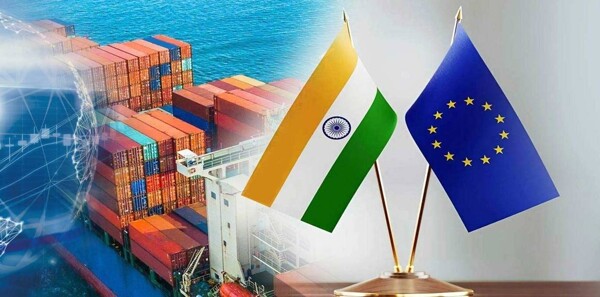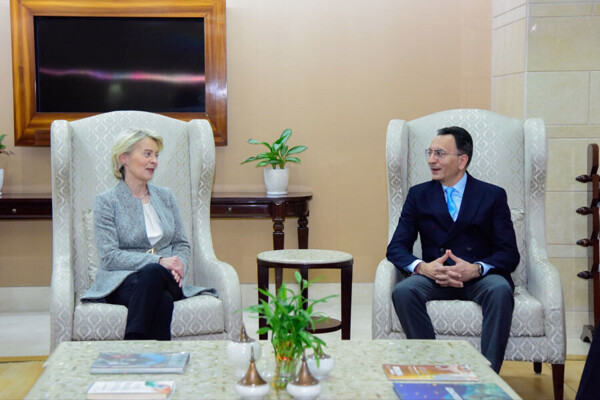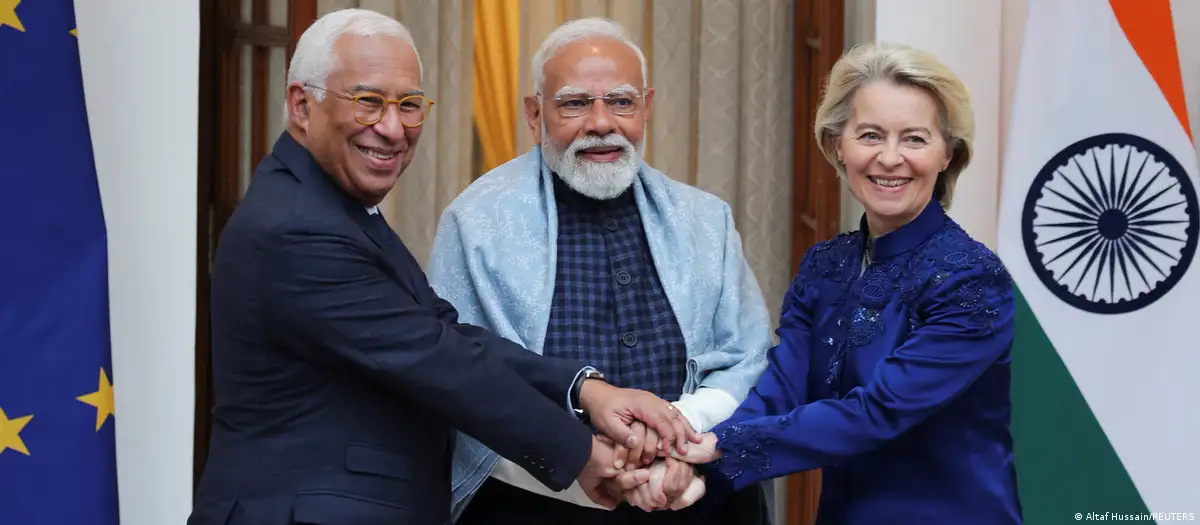
India and the European Union have closed a trade deal that will unite the world's second and fourth largest economies into an integrated market of about 2 billion consumers, representing one of the largest strategic movements in international trade in recent years. The pact was formally concluded this week in New Delhi, although its entry into force will still depend on the approval of the parliaments of the European Union and India. In New Delhi, they emphasized that access to European capital and technology will be key to accelerating infrastructure modernization and creating millions of jobs. The impact of the agreement is also being watched with attention in Latin America and, in particular, in Argentina. In the same vein, Indian Prime Minister Narendra Modi stated that the understanding opens up concrete opportunities for India's 1.4 billion inhabitants and for hundreds of millions of citizens of the European bloc, and highlighted that the deal involves around 25% of the world's Gross Domestic Product and about a third of global trade. Negotiations accelerated in the final stretch, driven by the hardening of the international scenario, marked by the tariff war initiated by the United States and the growing strategic competition with China. Even so, the announcement had an immediate impact on markets and the global geopolitical reading, consolidating an economic axis aimed at balancing the growing weight of the United States and China in world trade. The President of the European Commission celebrated the conclusion of the agreement by stating that an unprecedented free trade area has been created, from which both sides expect long-term structural benefits. Around the world, it is being described as the 'mother of all agreements,' Modi said during a public video intervention. India and the European Union close a trade deal after 18 years of negotiations. The agreement provides for the elimination or reduction of tariffs on 96.6% of EU goods exports, an opening that will save European companies around 4 billion euros annually in tariffs and will allow goods exports to the Asian giant to double by 2032. Von der Leyen added that this understanding is 'only the beginning' and assured that the European Union and India will further strengthen their strategic relationship in the coming years. The European Commissioner for Trade, Maros Sefcovic, celebrated the conclusion of the agreement and defined it as the largest free trade agreement reached to date, by stressing that it is the result of more than a decade of work and a year of intense negotiations. This understanding marks a new standard in trade agreements and redefines global balances in a world that is accelerating its economic and strategic reorganization.