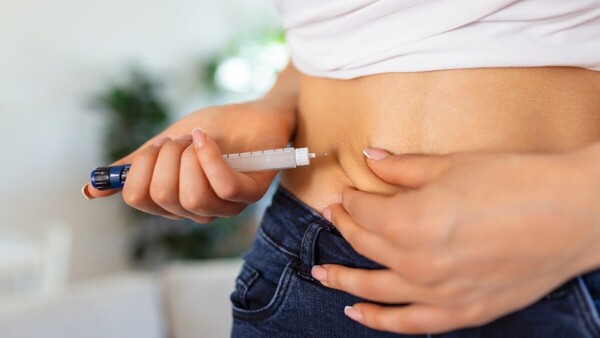
In a significant step towards administering insulin to diabetics without needles, scientists have successfully tested a gel on animals that can efficiently deliver insulin, normalizing blood sugar levels. A study published in Nature in November showed that the gel restores blood sugar levels to normal in diabetic mice and pigs within one to two hours of application, maintaining normal levels for about 12 hours. The speed of action and long-lasting effects of the gel are comparable to the effectiveness of basal insulin injections, which provide a steady dose to stabilize blood sugar between meals and overnight. This gel is typically used with fast-acting insulin, which is taken before, during, or immediately after meals to control sharp spikes in blood sugar caused by eating. Sujithan Pal, an associate professor and head of the Biomaterials Laboratory at the Indian Institute of Technology in Bhilai, noted that the gel is 'elegant from a mechanical standpoint, but is still in the experimental phase.' According to Live Science, the gel has only been tested on mice and pigs, not on humans, and the reaction of human skin—which can vary in thickness, fat content, and acidity—may differ from that of animals. Experiments on diabetic mice showed the gel reduced blood sugar within an hour and kept it normal for 12 hours, but at a high dose. In pigs, a lower dose successfully normalized blood sugar without skin irritation. This gel could help patients who fear injections and serve as an alternative to long-acting insulin, but it is not suitable for emergencies due to its slow absorption.